Psocoptera Redwork: A Designer's Review for Business Merch
The First Impression: A Delicate Balance for Brand Identity
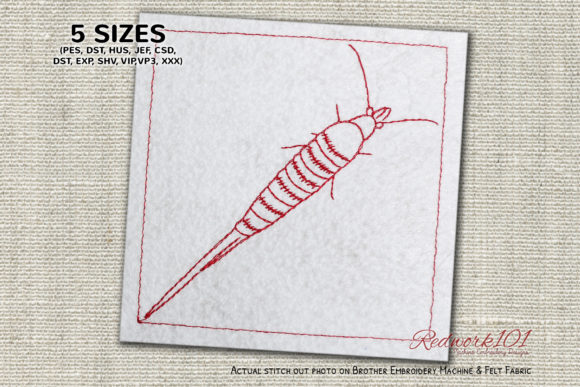
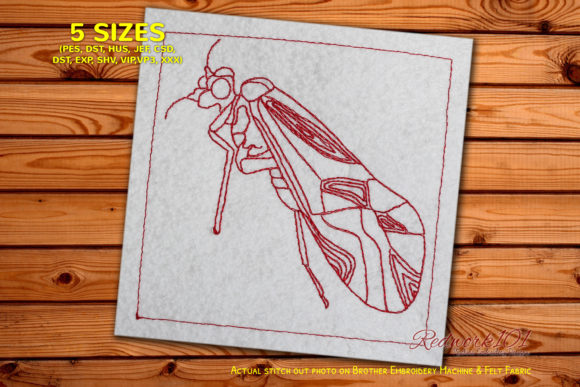
When reviewing Psocoptera Redwork as a design asset for small business merchandise, the initial take is intriguing. The redwork technique suggests a classic, illustrative feel, leaning towards handmade and decorative. The subject, a psocoptera or barklouse, places it firmly in the Bugs category, which immediately opens up unique branding avenues. For a business, this isn't just a generic logo; it carries a specific, natural personality. Depending on your application, Psocoptera Redwork can read as playfully scientific, elegantly rustic, or artfully premium. It feels less like a corporate mark and more like a signature—an accent that tells a story. This is key for businesses like a boutique, a creative studio, a botanical shop, or a pet brand looking to build a distinct, engaging identity.
Real-World Business Applications: From Patches to Product Labels
Let’s move from impression to application. For a small café, handmade shop, or local bakery, embroidery isn't just decoration; it’s a tool for branding and adding tangible value. Psocoptera Redwork offers versatility across several key merchandise types.
Embroidered Patches for Versatile Branding
As a stand-alone embroidered patch, Psocoptera Redwork becomes a powerful asset. A boutique could sew it onto tote bags as a signature mark. A florist might use it on staff aprons or work shirts as a subtle, artistic logo accent. For an Etsy seller or craft business, a patch featuring this design could be applied to product packaging or sold as a customer gift or event merch item itself, directly extending the brand.
Direct Apparel Embroidery for Uniforms & Merch
For direct machine embroidery onto apparel, Psocoptera Redwork can serve as a sophisticated sleeve detail, a chest logo on a polo, or a focal point on a tote bag. Its illustrative nature makes it ideal for custom apparel meant to feel special and handcrafted, rather than mass-produced. Consider it for cap embroidery on a curved surface or as a small accent on an apron—these applications boost brand identity and customer recognition every time a staff member interacts with a client.
Strategic Considerations for Professional Results
While the design potential is strong, its successful execution in commercial embroidery depends on careful planning. The description notes that the outer box stitch is optional and its color can vary or be skipped. This flexibility is excellent for adapting to different backgrounds, but it requires a designer's eye.
Where to Use Psocoptera Redwork Carefully
- Small Patch Sizes & Cap Fronts: The illustrative detail needs to be evaluated at a small scale. Test the digital embroidery file at your intended size (e.g., 1.5 inch) to ensure the psocoptera's features remain clear and don't get lost in high stitch density.
- Thread Color Contrast: The "redwork" suggests a primary color, but contrast with the fabric is paramount. On dark uniforms or bags, you may need to adjust thread colors or utilize a lighter backing to make the design pop.
- Fabric Texture & Durability: For items like work shirts or aprons that need frequent washing, a robust embroidery setup is needed. Use proper stabilizer and consider stitch density to ensure the design holds up over time, maintaining that professionalism and product value.
Impact on Brand Identity & Customer Perception
Integrating Psocoptera Redwork into your business’s visual assets affects more than just aesthetics. It influences customer trust, engagement, and perceived value. A well-executed embroidered patch on a high-quality tote bag elevates a simple product into a handmade product with a story. On staff uniforms, it creates visual consistency and a sense of care and attention to detail. For a digital embroidery file buyer, using this design across different mediums—patches, apparel, mockups—builds a cohesive brand world that feels intentional and authentic. It signals a business that invests in its own presentation.
Practical Designer Notes Before You Hit Production
Before running this embroidery file on a dozen caps or a hundred patches, here are my direct recommendations as a professional embroidery designer reviewing for small business merch:
- Test in Black and White First: Create a simple stitch-out, even in one color, on your intended fabric. This reveals the core structure and detail clarity without color variables.
- Check Hoop Size & Stabilizer Compatibility: Confirm the design works within your standard hoop sizes for production efficiency. Always match the stabilizer to your base fabric texture.
- Create a Printable Mockup for Client Approval: If you're an embroidery shop producing for a client, or a business owner yourself, visualize it. Place Psocoptera Redwork within a mockup of a cap, apron, or bag to see how it integrates with other design assets.
- Review Thread Colors for the Optional Box: If you use the box, ensure its color doesn’t clash with your brand palette. If you skip it, verify the design's outer edges are clean and finished.
- Confirm Commercial Licensing: Before any business use, verify the licensing terms of the Psocoptera Redwork file for commercial embroidery projects. This is a crucial, often overlooked step.
Ultimately, Psocoptera Redwork is a distinctive embroidery design with strong potential to elevate a brand’s handmade presentation and buyer engagement. Its success lies not just in the file itself, but in your strategic application—testing, adapting, and placing it where it tells your business’s story best. For a brand leaning into natural, artistic, or niche themes, this bug can be a beautiful mark of identity.