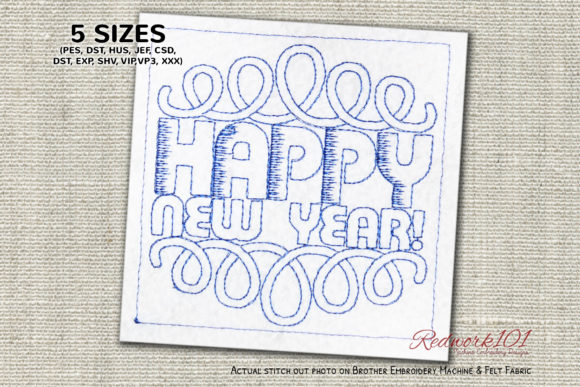
A Designer’s Review of the Happy New Year Redwork Pattern
As an embroidery designer running a personalized gift shop, I spend a lot of time evaluating new designs. Before any pattern goes into a customer’s order—onto a baby blanket, a wedding keepsake, or a custom tote bag—it needs to pass a practical, hands-on review. Today, I’m taking a close look at the Happy New Year Pattern Redwork. Let’s walk through its potential as a heartfelt, marketable embroidered product.
First Impressions: Charm and Seasonal Warmth
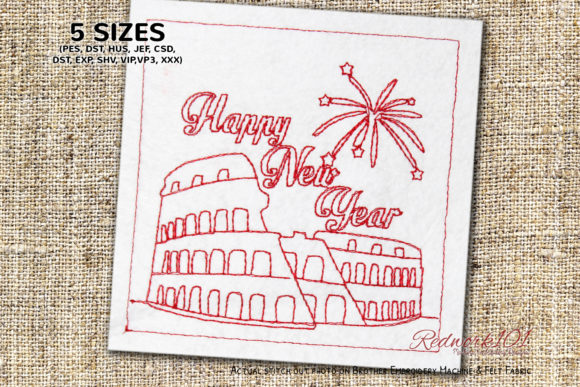
The moment I opened this machine embroidery design, its mood was clear. This pattern carries a sweet, classic charm. It feels handmade and warm, perfectly capturing that hopeful, celebratory spirit of the New Year. The level of detail appears balanced—not overly dense, which is excellent for a wide range of fabrics. Its emotional appeal is straightforward: it’s a personalized gift that marks a moment, a fresh start. It leans more towards a timeless, elegant feel than a playful one, making it versatile for both romantic keepsakes and simple seasonal decor.
The Versatility of a New Year’s Motif
Thinking about my shop’s offerings, the applications for this embroidery file are plentiful. Its redwork style and celebratory message make it a natural fit for many products.
- Baby embroidery and nursery items: Imagine it delicately stitched on the corner of a receiving blanket to welcome a new year baby.
- Wedding gifts for couples marrying around the holiday season, embroidered on a pillow cover or apron as a unique keepsake.
- Family keepsakes, like a decorative pillow for the living room that becomes an annual tradition.
- Personalized towels and kitchen linens for a festive home touch.
- Custom embroidery on tote bags, aprons, or blanket embroidery for craft fair products.
For Etsy sellers and small shop product creators, this design can be a star in your holiday lineup. It works beautifully for digital embroidery file previews and printable mockups to show customers before stitching. Whether you’re creating wedding gift bundles or baby embroidery sets, this pattern adds a meaningful, seasonal layer.
Considerations for a Perfect Finished Product
Every design has its ideal applications and areas where caution is needed. Based on the design’s characteristics, here’s where I’d advise careful planning.
- Small lettering: If the pattern includes fine text, test it thoroughly on scrap fabric first. Some home machines might struggle with tiny script on textured fabric.
- Delicate details: On thick towels or stretchy baby clothes, using the proper stabilizer is non-negotiable to preserve clarity.
- Fabric texture and dark fabric: Always compare light and dark fabric mockups. Check thread color contrast to ensure the redwork pops, especially on darker backgrounds.
- Curved surfaces like caps or rounded pouches might require careful hooping.
- For products that need frequent washing, like kitchen towels, reviewing the stitch density is key. Too dense stitching can stiffen the fabric; too light might not withstand washes.
The product description mentions that “The Box Stitch shown in picture is optional.” This is an important note. As a designer, I appreciate this flexibility. It allows me to adapt the final look to the finished product. If the outer box isn’t integral to the design’s feel for my specific item—say, a minimalist baby blanket—I can skip it, simplifying the stitch-out and potentially reducing the hoop size needed.
Giftability and Customer Perception
How does this pattern affect the business side? When a customer sees an embroidered towel or pillow cover with the Happy New Year Pattern Redwork, what do they feel?
Its classic, clean look boosts perceived value. It doesn’t look hastily made; it looks intentional and skilled, which builds customer trust. The handmade product quality is evident. This design fosters an emotional connection—it’s not generic. It speaks to a specific time and sentiment, making the gift more meaningful.
For product photography and buyer engagement in online shops, this pattern is a winner. The clear, celebratory motif photographs well, telling a story instantly. It helps customers envision it on their own custom embroidery projects, increasing the likelihood of a custom order.
Practical Steps Before Your First Stitch
Before I’d list this as a ready-to-ship item or offer it as a commercial embroidery service, my checklist is straightforward.
- Test on scrap fabric identical to your final product material. This reveals everything.
- Confirm the required hoop size by running the file in your software. Don’t assume.
- Review stitch density by looking at the file closely. Is it appropriate for your target fabric?
- Use the proper stabilizer for the project. A towel needs a different approach than a pillow cover.
- Check small details after stitching on your test piece. Are any areas too faint or too thick?
- Most critically, confirm commercial licensing before selling finished products. The product description doesn’t specify license terms, so it’s essential to verify this with the designer or distributor. Never assume a file is licensed for commercial use without explicit confirmation.
Missing details like exact stitch count or file format aren’t invented here; they must be checked by you in the actual design package. This due diligence separates a hobby project from a reliable small shop product.
A Pattern for Meaningful Moments
In the world of personalized gifts, the Happy New Year Pattern Redwork stands out as a versatile, emotionally resonant design. From the Etsy seller crafting holiday listings to the baby product creators welcoming newborns, this pattern offers a way to mark a new beginning with warmth and craftsmanship. Its placement in the Paisley category and Embroidery type feels appropriate—it has that decorative, ornamental quality suitable for keepsakes.
Approach it with a practical eye, test it thoroughly, and clarify its licensing. Then, this design can become a cherished part of your product line, turning a simple towel, blanket, or bag into a gift that holds a moment in time.